
What if staying connected
didn’t mean losing yourself?
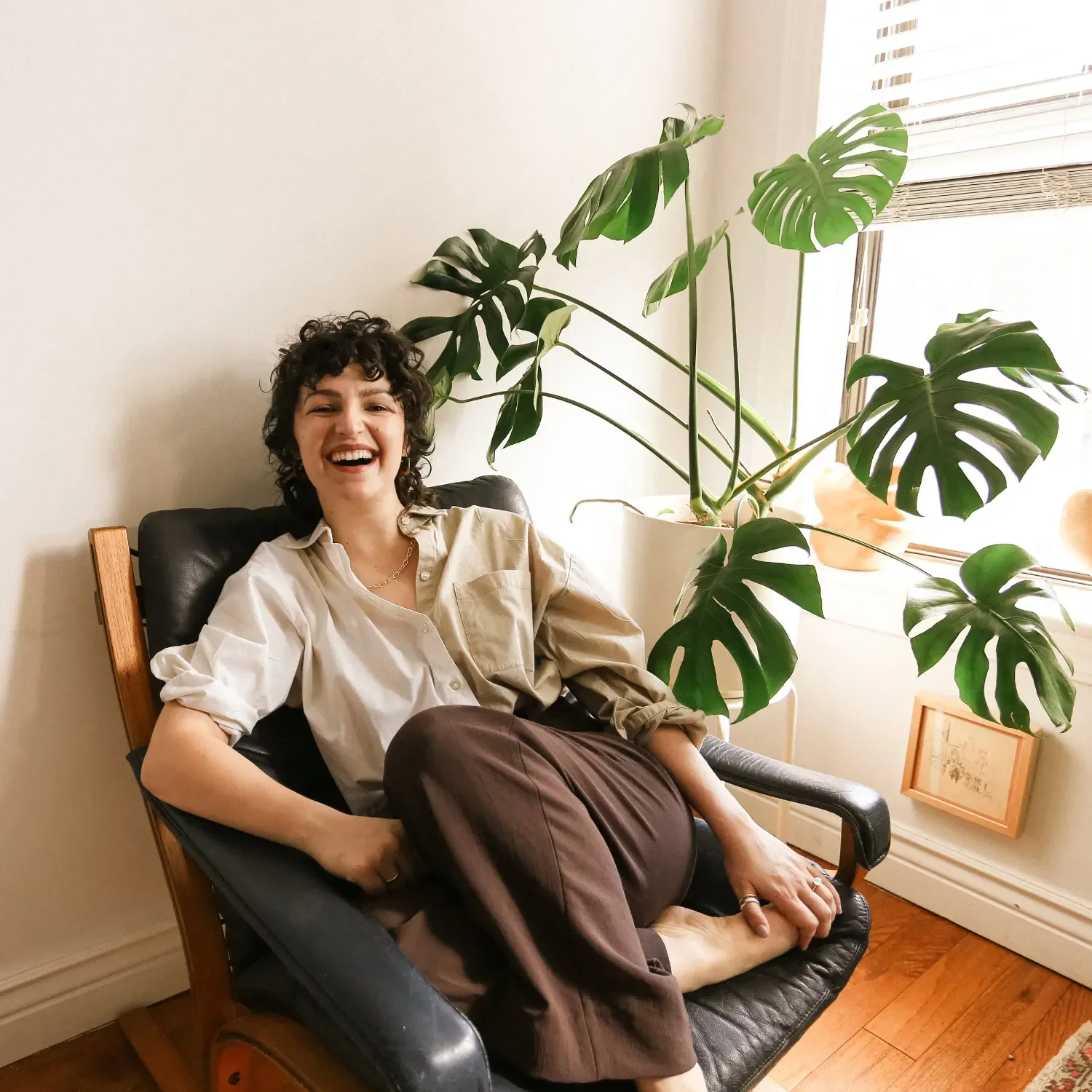
I used to be a professional actor in New York. I'm a second-generation Iranian immigrant who was "too white" to play Middle Eastern and "not white enough" to be considered white. I spent years learning how to become whatever a room needed me to be.
That skill kept me working. It also meant I didn't always have a say over my own body or self-expression. I got very good at tracking other people's reactions and very disconnected from my own.
Most of my clients are doing some version of this in their relationships and in the bedroom: performing instead of feeling or tracking their partner instead of staying connected to themselves.
I became a therapist because I wanted to support how invisible identities (neurodivergence, queerness, cultural conditioning, trauma, etc) live in the body and shape our relationship to sexuality.




Education & Clinical Training
Comprehensive Sex Therapy Program, South Shore Sexual Health Center
Internal Family Systems-IFS (Level 2), IFS Institute
IFIO (Intimacy from the Inside Out), IFS for Couples
Crucible Therapy for Couples, ICTEC
Trauma Conscious Yoga Therapy, 475hrs
Licensed Clinical Social Worker (LCSW) in New York #101776 and Oregon #L16353
MSSW, Advanced Clinical Practice, Columbia University
BFA, Drama, New York University Tisch School of the Arts